Plant machinery
Operator Training Courses designed to build your skills and confidence
Are you thinking about a career change or want to expand your plant machinery skills and knowledge to better carry out your work confidently and safely, as you progress your career in the construction industry
Plant Machinery Operator Training – Build Your Skills & Career
Becoming a qualified plant machinery operator opens the door to a rewarding and in-demand career across construction, civil engineering, groundwork, infrastructure, and logistics. At Gatewen Training Services, we deliver comprehensive plant machinery operator training across North Wales and throughout the North West to help you get qualified with confidence.
What Is Plant Machinery Operator Training?
Plant machinery operator training teaches you how to safely and effectively operate a wide range of heavy equipment used on construction and industrial sites. This includes machines such as excavators, dumpers, loading shovels, ride-on rollers and skid steer loaders — all delivered through expert instruction with a focus on practical, hands-on experience as well as essential safety knowledge.
Why Train as a Plant Machinery Operator?
There are many reasons people choose to train as a plant machinery operator in the UK:
Strong career prospects: Skilled operators are needed across the construction, civil engineering, infrastructure and logistics sectors.
Good earning potential: Qualified operators often command competitive pay and can progress to supervisory or specialist roles.
Safety and compliance: Training equips you with the knowledge to work safely and meet legal and industry standards under Health & Safety legislation and equipment regulations.
Recognised certification: Completing accredited training helps you gain industry-recognised qualifications that employers trust.
Route to Becoming Qualified
Choose Your Training (see options below): Start with novice training if you have little or no experience, or conversion/refresher courses if you’ve already operated similar machinery.
Complete Accredited Training: Courses are delivered by our qualified instructors and focus on both theory and practical operation of plant machinery. Accreditation with recognised bodies (such as BRITTOP or NPORS) ensures your skills are understood and valued nationally.
Gain a Red Trained Operator Card: After successful training and assessment, you’ll usually receive a formal card indicating you are a trained operator — often a prerequisite for site work.
Progress to Full Competence: With experience and further assessment (for example through an NVQ Level 2 in Plant Operations), you can achieve fully competent operator status with a Blue Card (CPCS or NPORS), expanding your employment opportunities across the UK..
Frequently Asked Questions – Plant Machinery Operator Training
Do I need previous experience to train as a plant machinery operator?
No. Many learners start with novice plant operator training, which is designed for those with little or no prior experience. We also offer refresher and experienced worker routes for those already working in the industry.
What types of plant machinery can I train on?
Training typically includes commonly used machines such as excavators, dumpers, rollers, loading shovels and skid steer loaders. Courses can be tailored depending on your job role or career goals.
How long does it take to become qualified?
Course length depends on your experience and the machine type. Novice courses usually take several days, while experienced operator or refresher courses may be completed more quickly. Progression to full competence is achieved through on-site experience and further assessment.
Is the qualification recognised across the UK?
Yes. Our training aligns with industry standards and leads to nationally recognised operator cards, which are accepted on construction and industrial sites throughout the UK.
What jobs can I apply for after training?
Qualified plant machinery operators work in construction, civil engineering, groundwork, utilities, infrastructure projects and logistics. Many operators also progress into supervisory or specialist roles.
Start Your Plant Machinery Operator Career Today
Whether you’re starting a new career, upskilling for better opportunities, or training staff to meet site requirements, Gatewen Training Services is here to help.
We provide professional plant machinery operator training across North Wales, Wrexham, Flintshire, Liverpool, Manchester, Chester and the wider North West, delivered by experienced instructors with a strong focus on safety, competence and real-world skills.
View more information about our wide range of training courses below or contact us today to discuss course availability, funding options and the right training route for you or your workforce.

Ready to embark on your new PLant machinery training journey?
For more information, contact Gatewen Training Services today
PLant machinery training Courses
Front Tipping Dumper
Front tipping dumpers are commonly used on many construction and related sites and are responsible for transporting materials safely and efficiently. The large number of forward tipping dumpers and operators means that incorrect operation often occurs and is responsible for many accidents and incidents. Operating a fully loaded dumper can be hazardous without proper training or planning, and without taking proper care and attention.
If you are looking for Forward Tipping Dumper training, we are a trusted and professional provider offering top-quality courses tailored to meet industry standards.
About Forward Tipping Dumper Training at Gatewen Training Services
Our Forward Tipping Dumper training course is specifically designed to equip both novice and experienced operators with the essential skills and knowledge required to safely operate forward tipping dumpers. These machines are commonly used on construction sites to transport and deposit materials like soil, gravel, and debris. Operating a forward tipping dumper may appear straightforward, but due to the nature of construction sites and the risks involved, professional training is legally required to ensure safety for both the operator and others on site. This course is fully accredited by recognised awarding bodies such as NPORS and BRITTOP, ensuring the qualifications gained are valid and widely accepted by employers across the UK.
Course Content
This training course covers both theoretical knowledge and practical skills. The course includes:
Health & Safety Regulations: Detailed instruction on relevant legislation including the Health and Safety at Work Act 1974 and PUWER (Provision and Use of Work Equipment Regulations).
Pre-Use Inspections: Candidates are trained to perform comprehensive checks and routine maintenance to ensure the dumper is safe to operate.
Understanding Machine Controls: Full familiarisation with all operating controls, ensuring the operator can confidently manage the dumper’s movements and functions.
Safe Operating Techniques: Instruction on safely loading, transporting, and tipping materials, recognising weight limits, and handling uneven or rough terrain.
Hazard Awareness: Identifying site hazards, including slopes, pedestrian areas, and obstacles, to minimize risk.
Practical Demonstrations and Exercises: Candidates practice under the guidance of experienced instructors, ensuring real-world competence.
Theory and Practical Assessments: Successful completion of both tests leads to certification.
Certification
Upon successfully passing the course, candidates receive a recognised certification card, often NPORS or BRITTOP, demonstrating their competency. This certification is essential for gaining employment on construction sites and meeting legal and safety compliance standards.
Ride On Roller
About Ride-On Roller Training at Gatewen Training Services
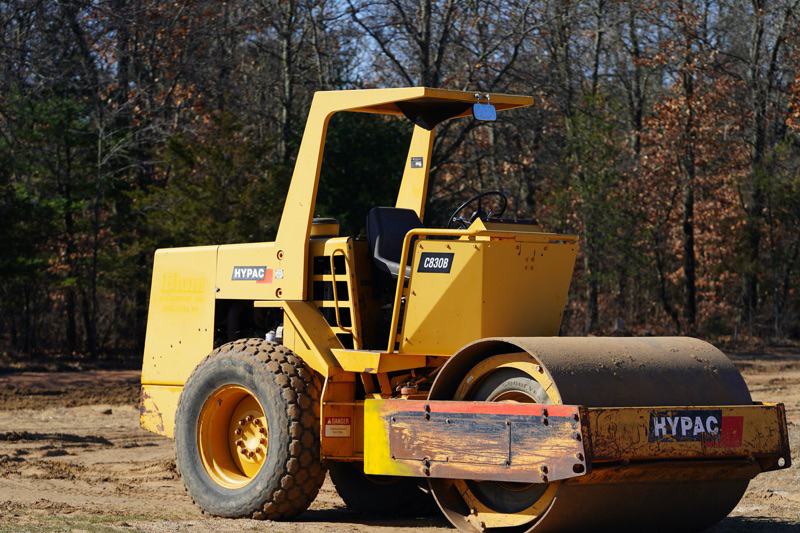
Our Ride-On Roller training course is designed to equip both novice and experienced operators with the essential skills and knowledge needed to safely and efficiently operate a ride-on roller. Ride-on rollers, also known as road rollers or compaction rollers, are commonly used in road construction, civil engineering, and groundwork projects to compact soil, tarmac, gravel, and other materials. We offer fully accredited courses, recognised by respected awarding bodies such as NPORS (National Plant Operators Registration Scheme) or BRITTOP. These certifications are nationally recognised and highly valued by employers across the UK.
Course Content
The Ride-On Roller training course covers both theoretical and practical elements to ensure all candidates leave fully competent and compliant with health and safety regulations. The course includes:
Health & Safety Legislation: Understanding key legislation including the Health and Safety at Work Act 1974, PUWER (Provision and Use of Work Equipment Regulations), and site-specific safety protocols.
Pre-Operational Checks: Training on how to carry out thorough pre-use inspections to ensure the roller is in safe working order before operation.
Understanding Machine Controls: Familiarisation with all operating controls, including steering, braking, and vibration systems.
Safe Operation Techniques: Instruction on maneuvering the ride-on roller safely, compacting various materials, working on gradients, and handling confined spaces.
Site Awareness and Hazard Recognition: Identifying common site hazards such as ground conditions, slopes, and working around other vehicles and pedestrians.
Practical Training: Hands-on training where candidates practice operating the roller under the supervision of experienced instructors.
Theory & Practical Assessments: A combination of written or verbal theory tests and practical demonstrations to assess knowledge and skills.
Certification
Upon successful completion of the course, candidates receive a certification card from either NPORS or BRITTOP, proving their competency and compliance with industry standards. This qualification is essential for those seeking employment in construction, groundwork, or road maintenance sectors and is valid across the UK.
Excavator 360
About the 360 Excavator Digger Training Course
The 360 Excavator Digger training course focuses on equipping candidates with essential skills and knowledge to safely operate tracked or wheeled excavators (both above and below 10 tonnes). 360-degree excavators are widely used in construction, civil engineering, demolition, and groundwork projects for tasks such as trenching, lifting, digging, and grading. The course is fully accredited by nationally recognised awarding bodies like NPORS (National Plant Operators Registration Scheme) or BRITTOP. These accreditations ensure that the qualification you receive is accepted across the UK construction and plant industries.
Course Content
Gatewen Training Services offer a comprehensive 360 Excavator Digger training course, covering both theoretical knowledge and practical skills necessary for safe and efficient operation. The course typically includes:
Health and Safety Legislation: An in-depth understanding of safety regulations including the Health and Safety at Work Act 1974, PUWER (Provision and Use of Work Equipment Regulations), and lifting operations protocols.
Pre-Operational Checks and Maintenance: Training on how to conduct daily inspections and maintenance to ensure the machine is safe to use.
Understanding Machine Controls: Full familiarisation with all operating controls, including boom, arm, bucket functions, and track or wheel controls.
Safe Operating Techniques: Instruction on how to carry out tasks such as digging, trenching, grading, and lifting safely and efficiently, taking into account ground conditions and load limits.
Awareness of Hazards and Safe Working Practices: Identifying site hazards, working safely around other machinery and workers, and understanding exclusion zones.
Lifting Operations (Optional): Some courses can also include lifting operations training, teaching operators how to safely use the excavator for lifting loads.
Practical Training and Exercises: Hands-on practice under expert supervision to build confidence and competence.
Theory & Practical Assessments: Testing the candidate’s understanding and ability through written or verbal theory tests and practical demonstrations.
Certification
Upon successful completion of the course, candidates are awarded an accredited certificate and operator card from NPORS or BRITTOP, demonstrating their ability to operate a 360 Excavator Digger safely and competently. This certification is valid throughout the UK and is essential for anyone seeking work in construction, demolition, or civil engineering.
SKID STEER
About Skid Steer / Bobcat Training
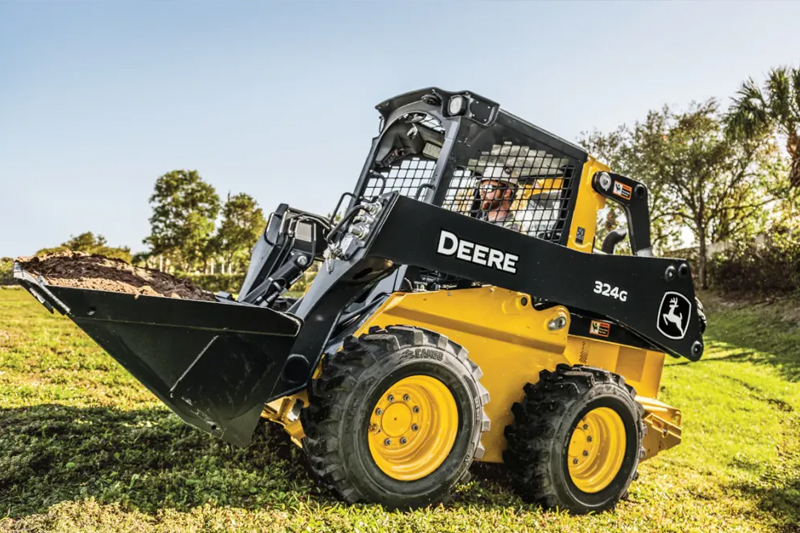
Our Skid Steer Loader (commonly known as Bobcat) training course is designed for both novice operators and experienced individuals who need to refresh or upgrade their qualifications. Skid steer loaders are versatile machines widely used in construction, landscaping, agriculture, and waste management for tasks such as digging, lifting, grading, and material handling. Operating a skid steer requires skill and a thorough understanding of safety practices. Gatewen Training Service’s training ensures that all candidates leave fully competent, confident, and compliant with health and safety legislation.
BRITTOP Accreditation
One of the key advantages of choosing us for your skid steer training is our BRITTOP accreditation. BRITTOP is a well-recognised accrediting body within the UK, known for maintaining rigorous standards in plant and construction training. Certification through BRITTOP not only demonstrates a candidate’s competency but is also widely accepted by employers across the construction and civil engineering sectors. BRITTOP-accredited training ensures that operators meet legal requirements under the Health and Safety at Work Act 1974 and PUWER (Provision and Use of Work Equipment Regulations). It provides peace of mind to both employees and employers that operators are trained to a high standard.
Course Content
The Skid Steer Loader (Bobcat) training course covers essential theoretical knowledge and practical skills, including:
Health & Safety Regulations: Understanding relevant legislation, site safety procedures, and responsibilities.
Machine Controls & Components: Full familiarisation with operating controls, attachments, and safety features of the skid steer loader.
Pre-Use Inspections & Maintenance: Learning how to conduct thorough daily checks to ensure the machine is in safe working order.
Safe Operation Techniques: Covering maneuvering, lifting, loading, grading, and working in confined spaces.
Site Awareness & Hazard Identification: Recognising potential hazards such as uneven terrain, overhead obstructions, and working near other machinery or personnel.
Practical Exercises: Hands-on practice under expert supervision to build real-world competence.
Theory & Practical Assessments: Comprehensive testing to ensure candidates understand and can apply their knowledge safely.
Certification
Upon successful completion of the course, candidates receive a BRITTOP-accredited certificate and operator card, proving their competency to operate skid steer loaders safely and efficiently. This certification is nationally recognised and is essential for gaining employment in construction, landscaping, and related industries.
Rear Tipping Dumper
About Rear Tipping Dumper Training at Wise Training Hub Ltd
Our Rear Tipping Dumper training course is designed to equip operators with the skills, knowledge, and confidence required to operate rear tipping dumpers safely and effectively. These machines are commonly used on construction sites to transport large quantities of materials like soil, aggregates, and debris, and they play a crucial role in site logistics. Due to the nature of these heavy-duty machines and the potential risks involved, formal training is essential. Gatewen Training Services ensures that all candidates are fully competent and compliant with current health and safety legislation.
BRITTOP Accreditation
We are proud to offer BRITTOP-accredited rear tipping dumper courses. BRITTOP is a respected accrediting body within the UK plant and construction industry, known for maintaining high standards in training and assessment. A BRITTOP certification is recognised across the UK, making it easier for operators to secure employment and meet legal requirements under the Health and Safety at Work Act 1974 and PUWER (Provision and Use of Work Equipment Regulations). Employers also benefit from knowing that their staff are trained to a nationally approved standard, ensuring compliance with health and safety regulations on site.
Course Content
The Rear Tipping Dumper training course is comprehensive, combining both theoretical instruction and practical training. The course covers:
Health & Safety Legislation: An overview of all relevant laws and regulations, including site safety procedures and legal responsibilities of operators.
Machine Components & Controls: Full familiarization with the dumper’s controls, features, and functions.
Pre-Use Inspections & Maintenance: Training on how to perform daily checks and basic maintenance to keep the dumper in safe working order.
Safe Operating Techniques: Instruction on how to load, transport, and tip materials safely, as well as how to handle the machine on various terrains and gradients.
Hazard Awareness: Identifying potential risks on-site, such as working near excavations, pedestrian zones, and other machinery.
Practical Exercises: Hands-on operation of the dumper under the supervision of experienced trainers, building confidence and competence.
Theory & Practical Assessments: Evaluating both theoretical knowledge and practical skills to ensure all candidates meet the required standards.
Certification
Upon successful completion of the course, candidates receive a BRITTOP-accredited certificate and operator card, verifying their competency to operate rear tipping dumpers safely. This certification is valid throughout the UK and is essential for working legally on construction sites.
Loading Shovel Truck
About Loading Shovel Training at Wise Training Hub Ltd
The Loading Shovel training course is tailored for both new operators and experienced individuals who need refresher training or certification renewal. A loading shovel, also known as a front-end loader or wheel loader, is a powerful and versatile machine commonly used in industries such as construction, quarrying, agriculture, waste management, and material handling. Its primary function involves lifting, moving, and loading bulk materials like soil, gravel, sand, or aggregates. Operating a loading shovel requires a specific set of skills and an understanding of safety procedures. Our training ensures that all candidates gain the necessary knowledge and practical ability to operate the machine safely, efficiently, and in compliance with health and safety regulations.
BRITTOP Accreditation
One of the key advantages of choosing Gatewen Training Services is our partnership with BRITTOP. BRITTOP-accredited training guarantees that the training delivered meets nationally approved standards and is widely accepted across the UK’s construction and plant industries. Holding a BRITTOP certificate demonstrates that you are competent and legally compliant under the Health and Safety at Work Act 1974 and PUWER (Provision and Use of Work Equipment Regulations). Employers highly value BRITTOP-accredited qualifications, as they provide assurance that operators have been trained to the highest safety and operational standards.
Course Content
The Loading Shovel training course is a balanced mix of theoretical instruction and practical exercises. The course typically includes:
Health & Safety Regulations: Comprehensive understanding of legal responsibilities, safety legislation, and site-specific procedures.
Machine Controls & Components: Full familiarization with the loading shovel’s controls, attachments, and functions.
Pre-Use Inspections & Maintenance: Training on how to carry out thorough pre-operational checks to ensure the machine is in safe working order.
Safe Operating Techniques: Instruction on maneuvering, loading, tipping, and transporting materials safely, including working on gradients and confined spaces.
Hazard Awareness: Identifying on-site hazards such as uneven ground, overhead obstructions, and operating near other machinery or personnel.
Practical Training: Hands-on experience under expert supervision to develop real-world operating skills.
Theory & Practical Assessments: Evaluation through written or verbal theory tests and practical demonstrations to ensure competency.
Certification
Upon successful completion of the course, candidates receive a BRITTOP-accredited certificate and operator card, proving their ability to safely and efficiently operate a loading shovel. This certification is valid across the UK and is essential for working on construction sites, quarries, and other industrial environments.
4×4 Off Road
4×4 off-road training is a type of specialised training that teaches individuals how to drive off-road vehicles such as jeeps, trucks, and SUVs in challenging and rough terrain. The training typically covers the basics of off-road driving techniques, including how to navigate steep inclines and declines, rock crawling, mud and sand driving, water crossings, and other challenging situations.
Common topics covered in 4×4 off-road training courses include:
Vehicle preparation: This involves understanding the various components of a 4×4 vehicle and how they can be modified or adjusted for off-road driving, such as installing off-road tires, upgrading the suspension system, and adding skid plates or rock sliders.
Driving techniques: This covers the basic driving techniques required for off-road driving, such as throttle and brake control, gear selection, and steering. Students learn how to navigate different types of terrain, such as rocks, mud, sand, and water crossings.
Safety and recovery: This covers important safety practices such as wearing protective gear, maintaining a safe distance from other vehicles, and using winches, tow straps, and recovery equipment in case of accidents or vehicle breakdowns.
Trail etiquette: This covers the proper etiquette and behavior expected on off-road trails, such as minimizing environmental impact, respecting other trail users, and avoiding damage to the vehicle and the environment.
Our 4×4 off-road training courses are designed to equip drivers with the skills and knowledge necessary to safely and confidently tackle challenging terrain in off-road vehicles.
All Terrain Vehicle
All-terrain vehicle (ATV) training is a type of specialised training that teaches individuals how to operate and ride ATVs safely and responsibly. ATVs are four-wheeled vehicles designed to travel over a variety of terrains, including dirt, sand, gravel, and mud.
Common topics covered in our ATV training courses include:
ATV operation: This covers the basic operation of an ATV, including starting and stopping the engine, shifting gears, and steering. Students learn how to control the ATV and maintain their balance while riding.
ATV safety: This covers important safety practices such as wearing protective gear, following the rules of the road, and understanding the risks associated with riding an ATV. Students also learn how to identify and avoid hazards while riding, such as obstacles, steep inclines, and sharp turns.
Riding techniques: This covers the basic riding techniques required for different types of terrain, such as hills, mud, and sand. Students learn how to adjust their riding style to different conditions and how to use their body weight to maintain control of the ATV.
Trail etiquette: This covers the proper etiquette and behavior expected on ATV trails, such as minimising environmental impact, respecting other trail users, and avoiding damage to the vehicle and the environment.
Our ATV training courses are designed to equip riders with the skills and knowledge necessary to safely and responsibly operate an ATV. By completing ATV training, riders can reduce the risk of accidents and injuries while enjoying the thrill of riding an ATV.
Slinger / Signaller
Slinger/signaller training is important for anyone involved in the lifting and moving of heavy loads on construction sites or other worksites.
Our Slinger / Signaller training course equips participants with the essential skills and knowledge required to safely and efficiently guide loads and communicate effectively on construction and industrial sites. Designed for individuals seeking competency in lifting operations, this course ensures compliance with workplace safety standards and industry regulations.
Course Objectives:
By the end of the course, participants will be able to:
Understand the roles and responsibilities of a Slinger / Signaller.
Identify different types of lifting equipment, slings, and attachments.
Safely plan and execute load slinging operations.
Communicate effectively with crane operators using standard hand and radio signals.
Recognise hazards and implement risk control measures.
Ensure compliance with relevant safety legislation and workplace procedures.
Certification:
Upon successful completion, participants receive a nationally recognised Slinger / Signaller certification, demonstrating competence in safe lifting and signaling operations.
Telescopic Handler
Telescopic handler training is a specialised training program that teaches individuals how to operate a telescopic handler safely and effectively. A telescopic handler is a versatile machine used in a variety of industries, such as construction, agriculture, and warehousing, for tasks such as lifting and moving heavy loads to different heights and distances.
Our Telescopic Handler Training Course is designed to equip operators with the skills and knowledge needed to safely and efficiently operate telescopic handlers in a variety of work environments. Combining hands-on practical training with essential safety instruction, this course ensures participants meet industry standards and regulatory requirements.
Course Objectives:
By the end of the course, participants will be able to:
Understand telehandler components, controls, and specifications.
Perform pre-operation inspections and routine maintenance checks.
Operate a telescopic handler safely in line with workplace protocols.
Assess load capacity, stability, and safe handling procedures.
Apply risk assessment and hazard prevention strategies on-site.
Respond effectively to emergency situations and equipment faults.
Certification:
Participants who successfully complete the course will receive a nationally recognised telehandler operator certificate, demonstrating their competence and compliance with industry safety standards.
Micro Digger 360 Excavator
Our Micro Digger 360 Excavator Training Course is designed to give operators the knowledge, skills, and confidence to safely and efficiently operate a micro or mini 360° excavator in a variety of working environments. The course combines classroom theory with hands-on practical training, making it suitable for both new and inexperienced operators.
Course Objectives
By the end of the course, delegates will be able to:
Understand the principles of safe excavator operation
Carry out basic pre-use inspections and daily checks
Operate a micro 360 excavator smoothly and efficiently
Perform common excavation tasks with accuracy and control
Identify hazards and work safely around people, services, and structures
Who the Course Is For
New or novice excavator operators
Operatives needing formal training or refresher instruction
Individuals working in construction, landscaping, utilities, or groundwork
Course Content
The course typically covers:
Health & safety responsibilities and legislation
Excavator components and controls
Pre-start checks and machine set-up
Safe operating techniques and best practice
Excavating, levelling, and backfilling
Working near services and obstacles
Shutdown procedures and basic maintenance awareness
Course Delivery
Classroom-based theory sessions
Practical, hands-on training using a micro 360 excavator
Small group sizes to ensure individual instruction
Assessment & Certification
Delegates will be assessed through practical observation and knowledge checks. Successful candidates will receive certification confirming they have completed Micro Digger 360 Excavator training.
Lifting Operations with an Excavator
Course Overview
This Lifting Operations (Lifting Ops) Excavator Training Course is designed to equip operators with the knowledge and practical skills required to safely plan and carry out lifting operations using an excavator. The course aligns with industry best practice and relevant legislation, helping operators reduce risk, prevent accidents, and operate confidently on site.
Who the Course Is For
Excavator operators required to carry out lifting operations
Construction and plant operators seeking to upskill
Employers looking to ensure workforce competence and compliance
Supervisors or site personnel involved in lifting activities
Course Objectives
By the end of the course, delegates will be able to:
Understand legal responsibilities and industry guidance related to lifting operations
Identify hazards and assess risks associated with lifting with an excavator
Select and inspect appropriate lifting accessories and attachments
Plan and execute safe lifting operations
Communicate effectively using standard signals and site procedures
Carry out lifts safely, efficiently, and in compliance with regulations
Course Content (Outline)
Relevant legislation and guidance (e.g. LOLER, PUWER)
Roles and responsibilities during lifting operations
Excavator capabilities and limitations
Load assessment and lift planning
Lifting accessories: selection, inspection, and use
Safe lifting techniques and stability considerations
Communication methods and hand signals
Practical lifting exercises
Accident prevention and emergency procedures
Course Format
Classroom-based theory sessions
Practical, hands-on training with an excavator
Instructor-led demonstrations and exercises
Assessment
Ongoing practical assessment
Knowledge checks to confirm understanding
Certification
Successful candidates will receive certification confirming competence in carrying out lifting operations with an excavator.
Suspended Loads (Telehandler)
This Suspended Loads (Telehandler) training course is designed to provide operators with the knowledge and practical skills required to safely lift, move, and place suspended loads using a telescopic handler. The course focuses on safe working practices, relevant legislation, and effective risk management when carrying out suspended load operations.
Suitable for both novice and experienced operators, the training ensures compliance with industry standards while promoting confidence, competence, and safety on site.
Course Objectives
By the end of the course, delegates will be able to:
Understand the hazards and risks associated with suspended loads
Carry out pre-use inspections and checks
Select and use appropriate lifting accessories
Safely lift, travel with, and place suspended loads
Communicate effectively using standard hand signals
Operate the telehandler in accordance with manufacturers’ instructions and site procedures
Course Content
The course typically covers:
Legal responsibilities and relevant health & safety legislation
Telehandler capabilities, limitations, and load charts
Types of lifting accessories and their correct use
Risk assessments and method statements
Pre-operational checks and defect reporting
Safe lifting techniques and load stability
Environmental and site considerations
Emergency procedures and safe shutdown
Assessment & Certification
Delegates will be assessed through a combination of theory and practical evaluation. Successful candidates will receive certification confirming their competence in operating a telehandler with suspended loads.
Who Should Attend
Telehandler operators required to carry out suspended load operations
Construction and plant operators seeking to upskill
Employers looking to meet site and regulatory requirements
Material Re-handler 360
The Material Re-handler 360 Training Course is a comprehensive, end-to-end program designed to equip participants with the knowledge, skills, and safety awareness required to operate 360-degree material handling equipment efficiently and responsibly. This course combines theory, practical application, and safety-critical best practices to meet industry standards and workplace compliance requirements.
Course Objectives
By the end of this course, participants will be able to:
Understand the principles and capabilities of 360-degree material re-handling equipment
Operate machinery safely, smoothly, and efficiently
Identify hazards and implement risk-control measures
Conduct routine inspections and basic maintenance checks
Work in compliance with site rules, manufacturer guidelines, and relevant legislation
Course Content
1. Introduction to Material Re-handling
Role and applications of 360 material re-handlers
Equipment types, components, and attachments
Understanding load charts and machine limitations
2. Health, Safety, and Legislation
Operator responsibilities and duty of care
Relevant health and safety regulations
Hazard identification and risk assessment
Safe working zones and communication on site
3. Pre-Operational Procedures
Pre-start inspections and defect reporting
Machine controls and instrumentation
Safe start-up and shutdown procedures
4. Operational Techniques
Correct positioning and machine stability
Safe lifting, slewing, and placing of materials
Working around people, structures, and services
Environmental considerations and site conditions
5. Attachments and Load Handling
Use of grabs, magnets, buckets, and other attachments
Securing and controlling loads
Preventing overloading and instability
6. Emergency Procedures
Responding to equipment failure or incidents
Emergency shutdowns
Reporting accidents and near misses
7. Practical Assessment
Hands-on operation under supervision
Demonstration of safe and competent machine use
Final evaluation of knowledge and skills
Target Audience
This course is suitable for:
New or inexperienced material re-handler operators
Experienced operators seeking refresher or upskilling training
Workers required to operate 360 material re-handling equipment on site
Certification
Participants who successfully complete the course will receive certification confirming their competency in operating 360-degree material re-handling equipment, subject to assessment and course requirements.
need more information, advice or guidance?
IAG is the process of providing you, our learners, with INFORMATION (facts and knowledge relating to learning and careers), ADVICE (recommendations based on our experience) and GUIDANCE (detailed 1-1 support from qualified IAG advisor) . This process allows you to make informed career decisions. In doing so you can:
Review your existing skills
Plan your career
Identify your skills gaps
Set new goals
Increase your levels of motivation
Raise your aspirations
Build your confidence and self-belief
